
1. Good advice.
You may recall that we reported that electric vehicles purchased under the Luxury Car Tax Threshold (LCTT currently $91,387 plus OTR costs) would qualify for FBT exemption and could be purchased for any private purpose.
For your spouse for instance. <click here> for a refresh of the rules.
You may also recall that we reported that a few manufacturers were discounting (very) heavily to clear huge stocks of electric vehicles due to lower demand and an ocean of Chinese vehicles flooding the market.
We have seen 40% to 50% discounts from RRP to get the vehicle price down to that LCTT. <click here> for a refresh. Call me of you want to know where the deals are.
Well … following such ‘good advice’, I bought a European luxury vehicle for a wonderful, fully deductable and ex-GST price. My wife was delighted!
2. On the road.
We decided to take the EV on a trip to the Hunter Valley. It’s a long way, even with a Sydney stopover. The advertised range advertised via the lab tested ‘NEDC standard’ is 536 kms. Sydney is 876 kms away so that means only one stop to recharge.
Actually, no.
In the rest of the world, the range quoted for my vehicle is much less than the wishful NEDC and the actual real world WLTP range is more like 400 kms. That’s 2 stops. But hey, breakfast and lunch and a bathroom break, it could still work.
Actually, no.
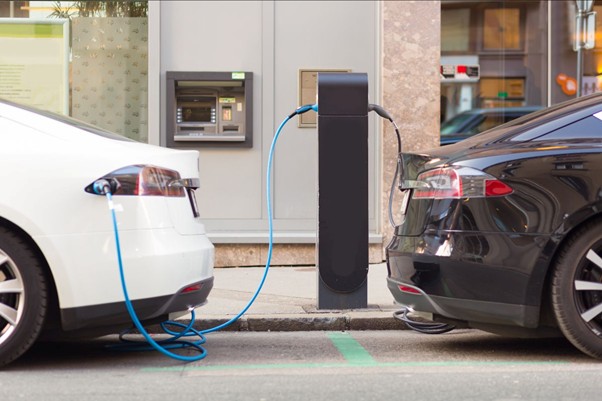
We arrive at our “Fast Charging” stop just shy of Albury. The Car App tells us where to go and which charging stand to use. We back in for the first time ever and plug in. And head to breaky. Most stops are located next to highway service stations, not near nice cafes.
The phone App tells me all is well.
But after 40 minutes, I notice that we have only added 15% to the ‘tank’. It’s not full. I calculate the fill will take several more hours yet. And we must stop another time. And then recharge somewhere in Sydney CBD too.
The charger is only delivering a measly 22-kWh. So much for a quoted 350-kWh station. I realised afterwards that this information was always there on the App.
After a few moments to collect my thoughts, we replaced the cable and headed to Albury. There is a Tesla “Supercharging” station in a parking garage there. This particular one is open to other vehicles for a moderate fee. The Supercharge promises much faster charging than a Fast Charger.
We plug in and go for a walk. Not 25 minutes later, my App tells me the car is already full, and we are good to go. There is a huge difference with a Supercharger. The car lapped up the 150-kWh plus that the machine delivers.
Thank you, Elon.
So, the rest of the trip was plotted from Supercharger to Supercharger. The technique also worked for our next trip to Merimbula too. It is a pity that only half of the Tesla Superchargers are available for non-Tesla vehicles.
Still, there is also Chargefox, Evie, and BP Pulse. All have Apps that show the varying power of the individual chargers. The Plugshare App will show where all of them (and more) are and whether they are working. Of course, most of them are fully operational.
Actually, No.
3. At home.
This is where our electric vehicle spends most of its life.
On any week, my wife uses around half a tank of electricity. Charging once a week is not big deal. And at 23 cents per kilowatt, the running costs are around $12 per week. That’s pretty good.
I would feel a lot better if half of this didn’t come from burning brown coal.
So, we can just plug in at a convenient time and by the morning, we will be good to go.
Actually, no.
Turns out that the trickle charger that comes with the car delivers a mighty 1.7-kWh. If your electric car needs (say) 70-kW to reach your desired level, that will take 41 hours.
And 41 hours is a very long time.
To address this problem, you need a home charger. They cost $1,500 to $2,800 and are not covered by the FBT allowance (although the electricity that you use is covered).
If you only have single phase power (as the basement in my car park has), your maximum rises to 7-kWh (and therefore 70-kW takes 10 hours). But if you have 3-phase power available (most homes with air-conditioning have this), you can enjoy up to 22-kWh. Now that’s very quick but probably unnecessary.
With the home charger installed, life is very simple, running costs are very low, we don’t need to visit fuel stations, and … my wife loves it?
Actually, yes.
4. Technology.
I can’t write all of this without talking about the car itself.
Despite its considerable weight, it is delightful to drive. Very quiet. Handles surprisingly well.
Yes, I know that all my mates who also love motor vehicles may never talk to me again … but I still have my 18-year-old classic V8 that gets driven maybe once a month.
My son will never let me sell that beast.
But the new technology! OMG. New cars are already too complex. I am an IT boffin from way back and still get stuck. If you have bought any new car lately, you will know what I mean. Just to do simple tasks (like radio volume) requires a PhD.
These cars now mostly drive themselves. Makes highway driving a breeze.
But adding into this complexity is the information and management of electric storage, usage and recharging. For a long trip, it will take a bit of planning. But for day to day, you just read the charge status on your phone and plug in once a week.
Frankly, the dealers need to run lessons in tech usage. I have friends that have been back for specialist lessons in different aspects of their cars. More than once too.
5. Summary
A lot of fun. Changes the driving experience entirely. But Australia needs more Superchargers to make drivers less anxious on a long road trip.
Did I buy the right car? Absolutely, yes.
Of course, happy wife, happy life!
Chris Alp July 2025.