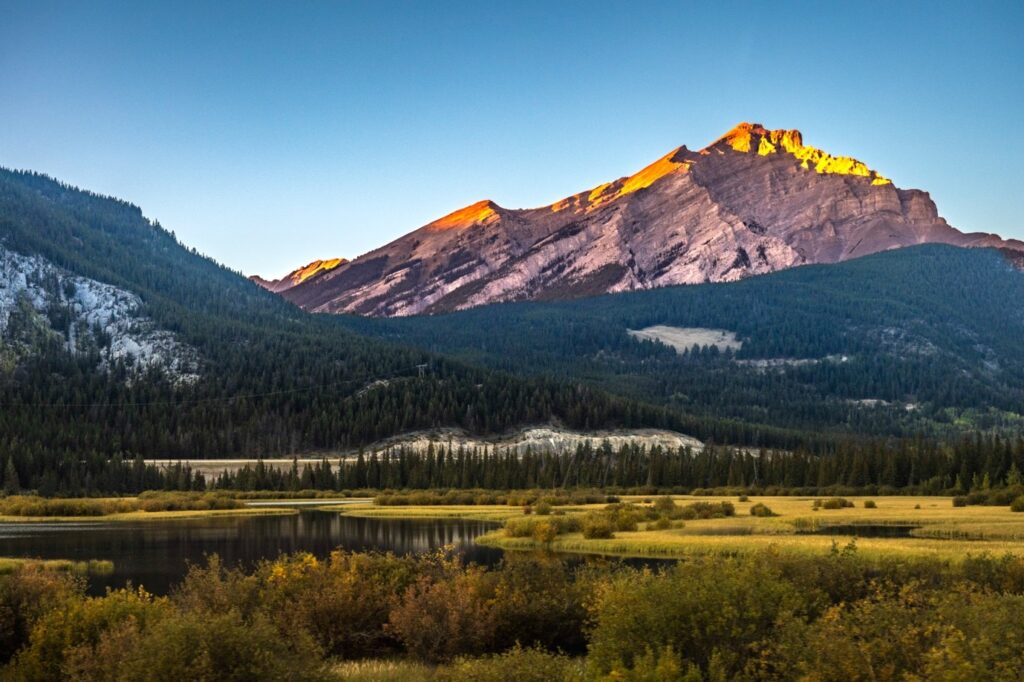
The Indian Pacific v/s the Rocky Mountaineer
Having completed the Australian Indian Pacific in January 2026, and the Canadian Rocky Mountaineer in late 2022, they make an interesting comparison.
Especially given my history…
1 The Indian Pacific
At the turn of the last century, Western Australia was totally isolated. Freight and passenger transport could only be on ships. The dirt track across to the west was effectively impassable.
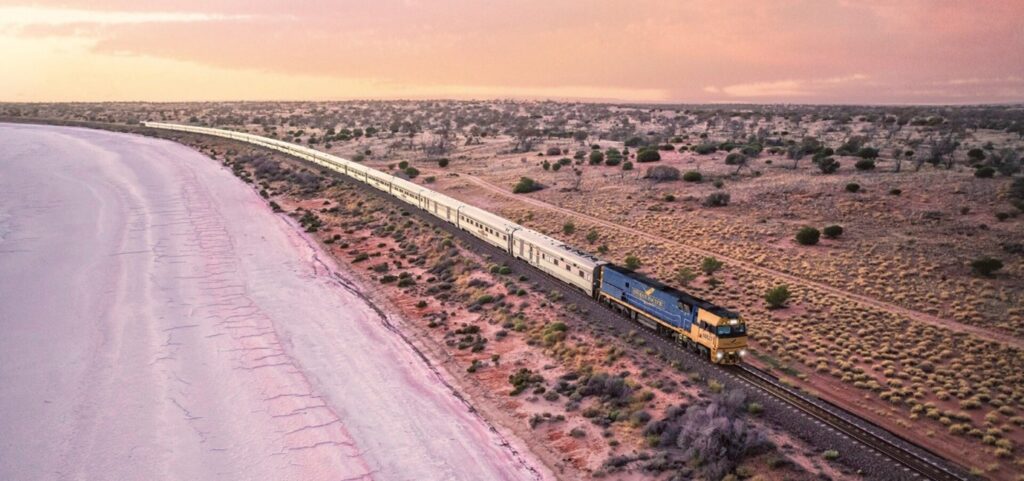
The Indian Pacific: Image by Journey Beyond Rail
To encourage the state of Western Australia to join the proposed Australian Federation, the “Founding Fathers” promised a rail link across the incredibly baron Nullarbor Plain to join Perth to the eastern state rail lines.
The mammoth construction would have taken years, but World War 1 accelerated completion by 1917.
As crazy as it sounds, Australian States had all chosen incompatible railway gauges that could never join.
The WA Narrow-gauge train met the new Standard-gauge railway at Kalgoorlie where passengers all changed trains. The new train then ran to Port Pirie in SA where all passengers would change trains again back to the Narrow-gauge train to Adelaide.
But if travelling on to Melbourne, there was a bigger surprise.
Victoria used Broad-gauge. When the train from Adelaide arrived at the SA/VIC border, every railway carriage was lifted individually by a crane, from its narrow-wheel ‘bogie’, onto a new broad-wheel bogie and the different Victorian track. The massive operation took workers hours to do for every train. Passengers could stay on board or not.
And on to Melbourne the train went.
Before I was 10 years old, my family had crossed the Nullarbor 5 times, twice on this crazy train. The other 3 crossings were gruelling events over the dusty 800km of unsealed dusty road (another story). Air travel was not an option for normal families.
I was very keen to experience this again. This time on the more modern Indian Pacific.
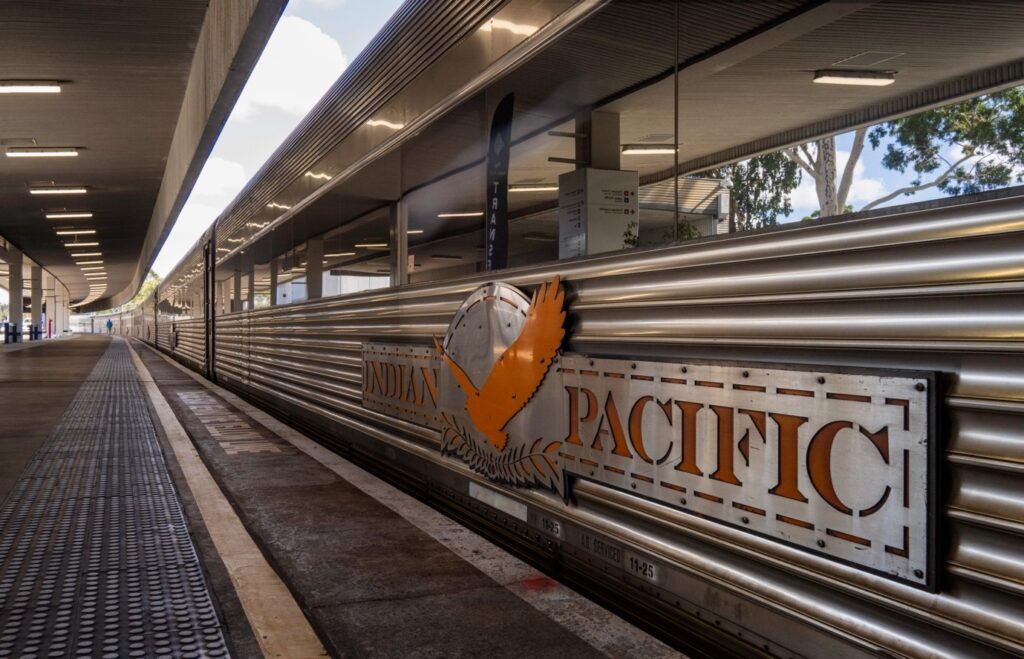 Ready to board the Indian Pacific in Perth: A leisurely two-day ride awaits
My memories of bunk beds in a tiny cabin, the clickety clack of the wheels, the endless views of saltbush and red dirt, and of course (most memorable for a little boy) the open toilet when the effluent went straight to the tracks below. Except not permitted during stops at the tiny stations along the way.
In 1971, the Standard-gauge track was extended to all capital cities. New comfortable trains were built, and these now run as the Indian Pacific (Perth/Adelaide/Sydney), the Ghan (Adelaide/Darwin) and the Great Southern (Adelaide/Melbourne/Sydney/Brisbane). The same (albeit refurbished) carriages still run the rails.
All services are privately owned by Journey Beyond Rail.
2 The Canadian Rocky Mountaineer
Just after Covid, when we were able to return to international travel, my wife and I flew to Vancouver in Canada and excitedly rode on the Rocky Mountaineer. Also considered one of the ten best rail journeys in the world.
Ironically, the Canadian Pacific Railway construction was promised as a condition of British Columbia joining the new federation of Canadian States. Just as in Australia.
Their track was also a gruelling construction. Following huge riverbanks, across breathtaking gorges, and even spiralling up inside mountains, this rail journey is truly epic.
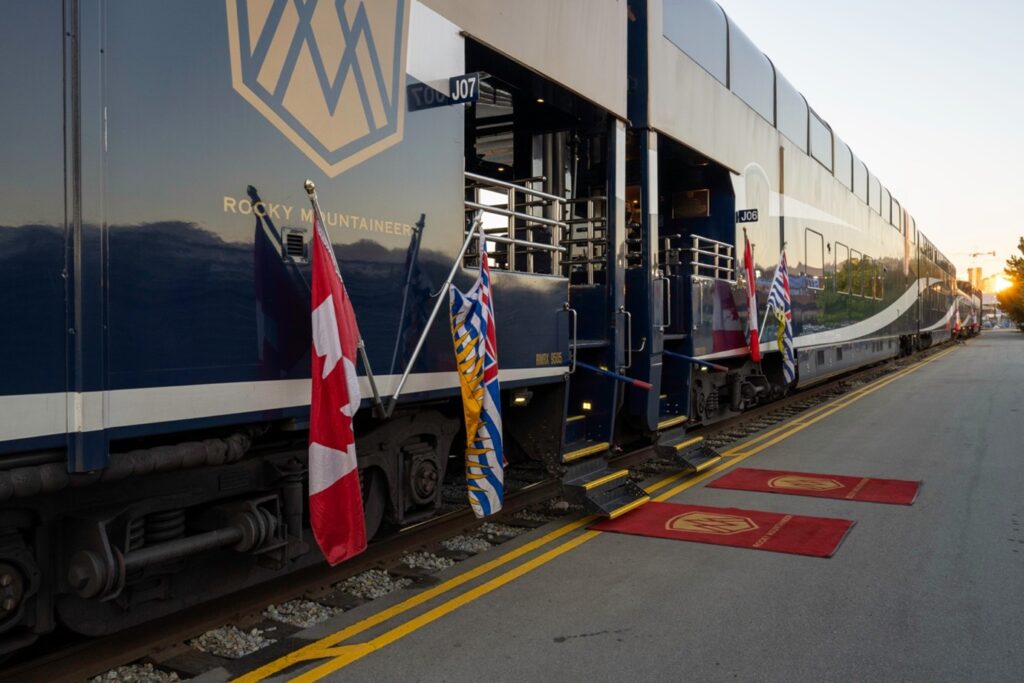 Rocky Mountaineer. Two story carriages. Each one with an elevator.
Some of the carriages (Silverleaf) of the Rocky Mountaineer were built in the 1950’s and refurbished and the premium cabins (here) are quite new (Gold Leaf).
3 Journey Times
The Indian Pacific leaves Perth once a week and journeys to Adelaide and then on to Sydney via Broken Hill. The section between Perth and Adelaide takes 48 hours and there are two nights travelling on board. That is the section we travelled.
The Rocky Mountaineer travels from Vancouver to Kamloops on day one. Passengers then leave the train, stay in hotels and have dinner off-train, and rejoin the train in the early morning. From there the train rides to either Jasper or Banff (and Lake Louise) arriving late afternoon. Lunches and breakfasts are on the train.
Many passengers arrive at either Banff or Jasper, bus through the amazing Icefield Parkway to the opposite destination and return to Kamloops and Vancouver from there.
4 Classes
It’s a train. Of course they have classes. But they don’t call it economy and first on either train.
The Indian Pacific has Gold, Gold Premium and Platinum. As you would expect, Platinum has more space, a double bed, bigger windows and probably better food and wines. As a disabled traveller, I had a larger cabin in Gold Premium and saved a few dollars.
Even in Gold Premium, there is a comfy lounge car with unlimited wine and snacks. And a separate dining car with its own kitchen.
The Rocky Mountaineer has Silverleaf (old fashioned carriages, but perfectly comfortable) and Goldleaf.
Upon arrival, they offered on-departure upgrades for those (like us) that had booked Silver Leaf. After scratching my head for a bit, I took the upgrade (but was stuck with the original standard of accommodation) and was very glad I did.
The Gold Leaf carriages are two story. Each carriage with an elevator. Upstairs is the seating with the famous glass panoramic roof. The glass above you is irrelevant as you don’t look upwards, but the glass is uninterrupted on all sides. Seats are very comfortable and service never stops.
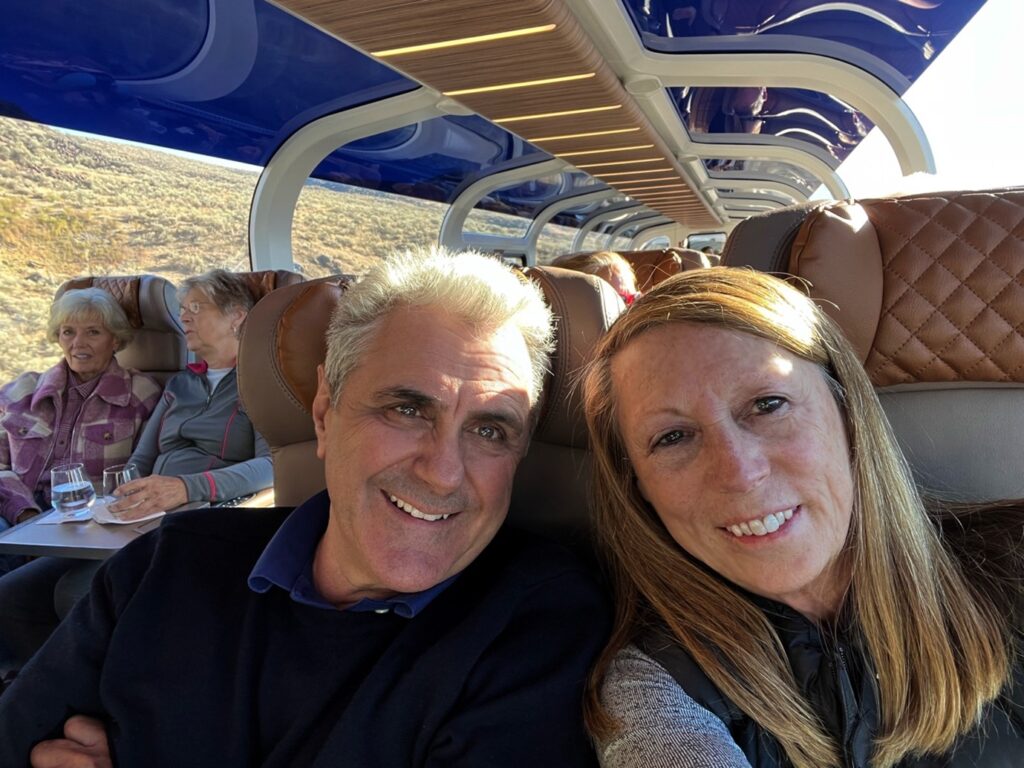 The viewing seats on the Rocky Mountaineer. Plenty of glass, big seats, big views.
The end of each carriage has a large open area to lean out and take photos. Or just enjoy the wind. Neither train travels very fast but that’s the point. Where special bridges, tunnels, mountains or passes approach, the staff warn you so keen photographers (like my wife) get uninterrupted views.
Mind you, most of the journey is along the side of huge rivers so there are trees spoiling the view a lot of the time.
Downstairs is the dining area (in two shifts). Each Platinum carriage has its own kitchen.
5 Food and Wine
Having experienced both, both were excellent. They try very hard to make this memorable.
I remember thinking that whilst not quite the same league for creativity, variety, quality and fun as perhaps Melbourne’s Gimlet, Supernormal, Cumulus, Cutler, or Marion. But, when you realise you are on a train in the middle of no-where, it is 9 out of 10. If at home, it would rate a little less.
But on both trains, there was always too much to eat. And drink. And in both cases, the staff were amazing. They get to know you after two days.
The Indian Pacific had a fabulous guitarist who joined us for the whole trip. He regularly played great songs and especially memorable on one of the two stops to view the milky way, next to a big bonfire, in the middle of the dessert. The train needs two stops to fill water tanks. The other stop was Kalgoorlie.
6 Comfort
Now here is the big difference.
Maybe it was because we were in the cheaper class. Maybe it was because we had to sleep on the train (not in a comfy hotel bed that didn’t rock, lurch and grind) or maybe because our carriage was 55 years old, but the Rocky Mountaineer was much more comfortable.
Perhaps an unfair comparison as I didn’t experience the best that the Indian Pacific had to offer. Others tell me it was very good.
7 Scenery
The Indian Pacific (and the Ghan) have days of simply nothing. Saltbush and red dirt. And occasional abandoned railway town and lots of broken fences and rusty windmills. Occasional sheep stations.
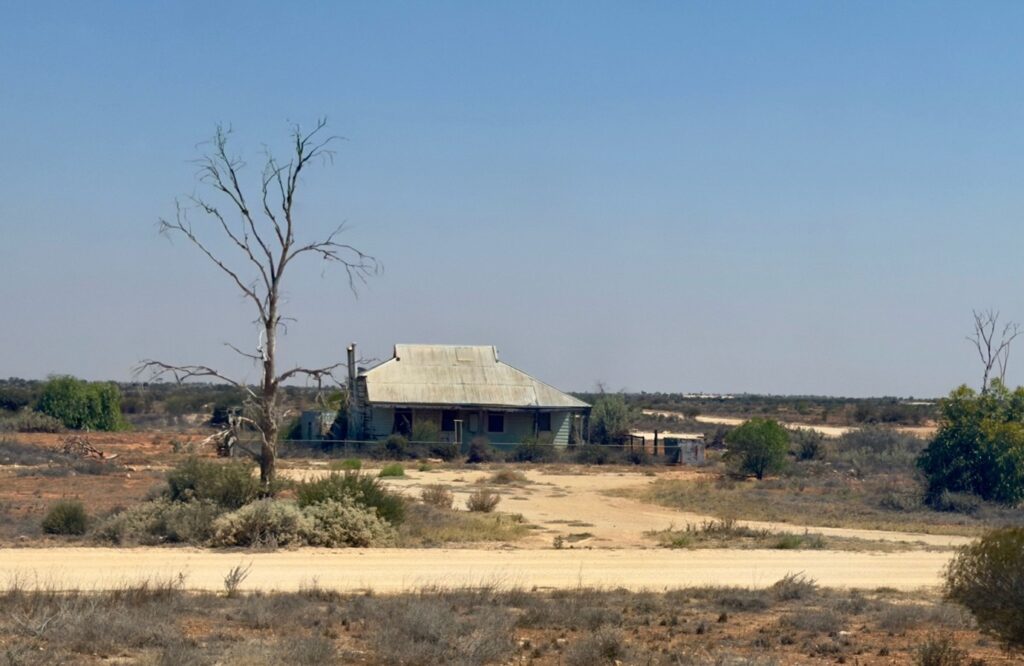
The train slows at the abandoned towns so passengers can see Australian history
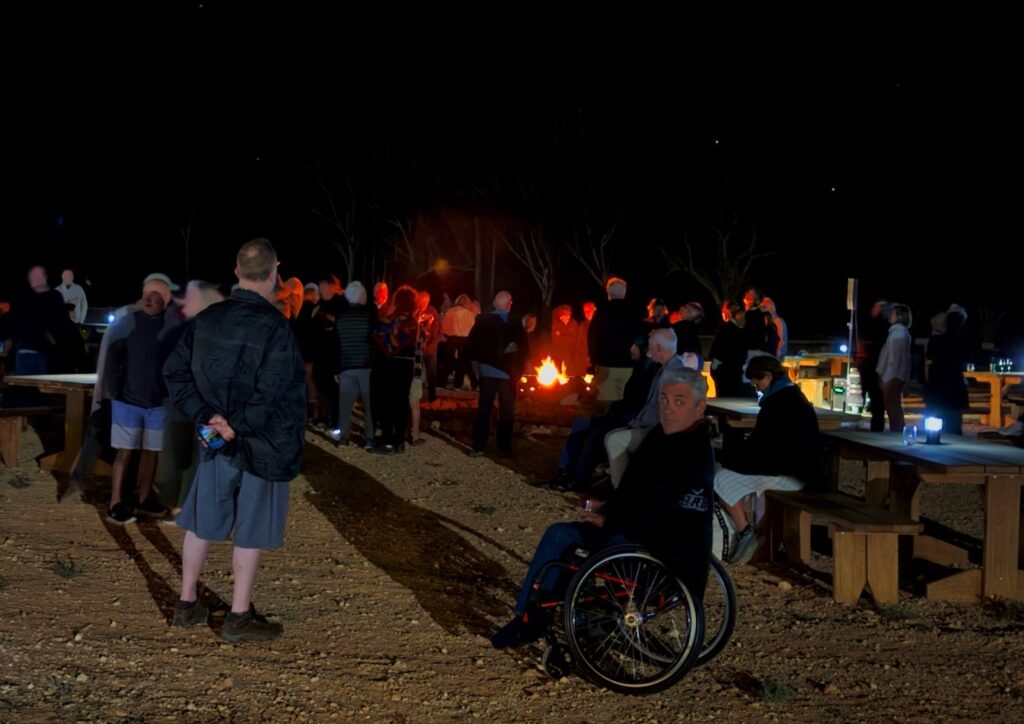
Star gazing next at the outback town of Cook. Music was good with a glass of fizz.
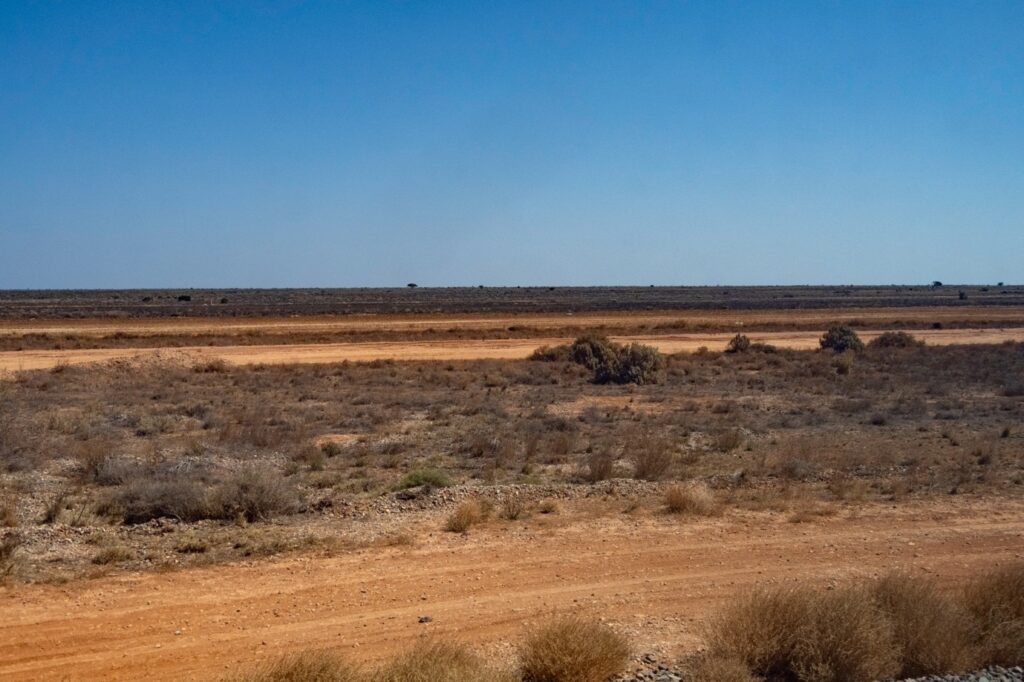
What do you expect when crossing a desert and following the longest straight track in the world?
The Rocky Mountaineer is always interesting. And twisting. And stunning. Albeit with trees obscuring vision for the enthusiast photographer. But good enough for me. Rivers, rapids, cliffs, mountain ranges, valleys, snow (and visible bushfires on our trip), trees and sky, plains of grasses. Unbelievable.
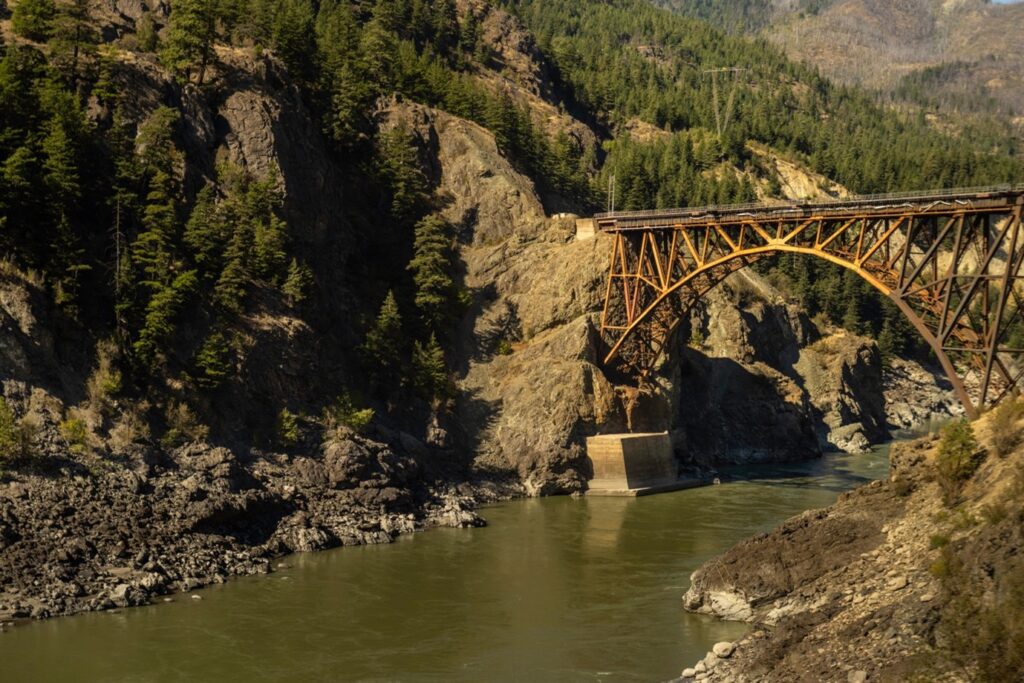
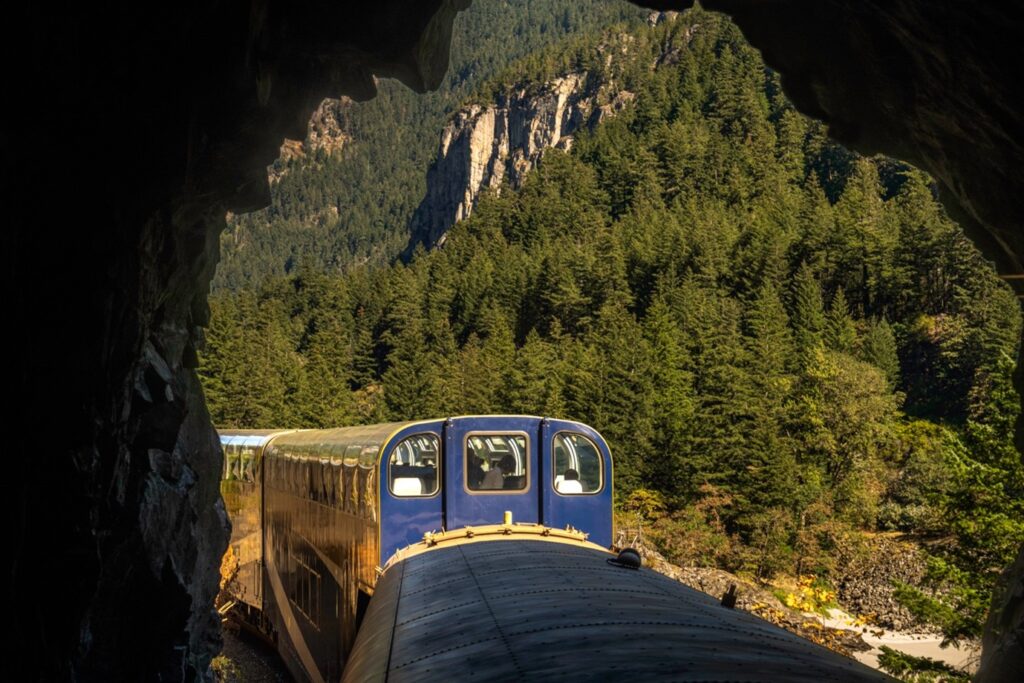
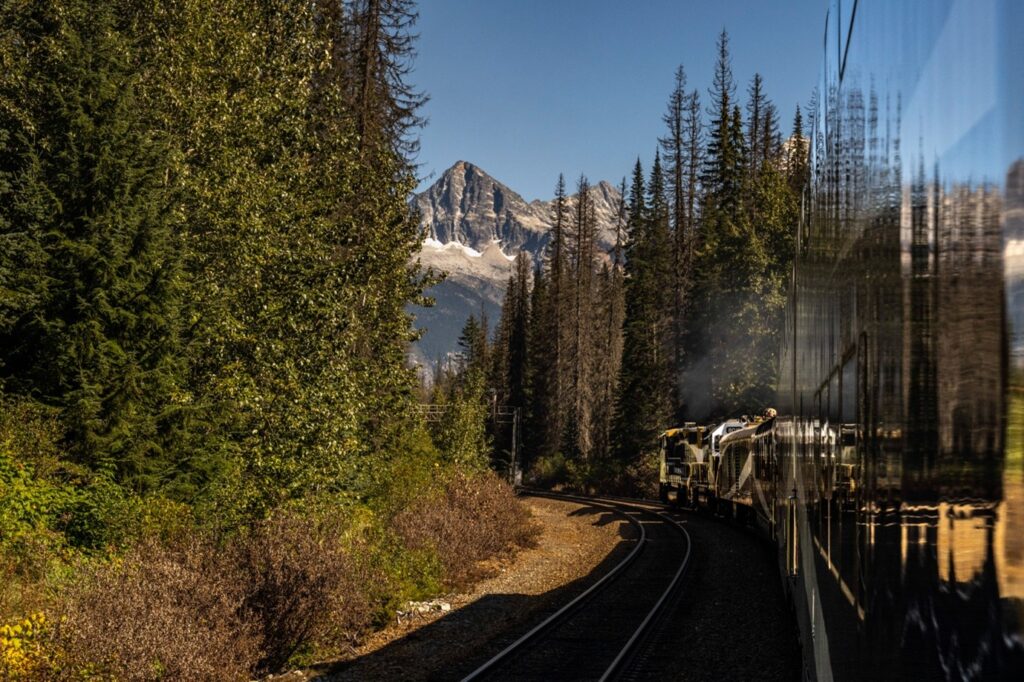
British Columbia to Alberta. Always something to look at.
There is another route to Jasper from Vancouver that travels via Whistler (called Rainforests to Goldfields). If you are interested in that route, book now as the Canadian Government is looking to close the track in a few years.
8 Price
I paid $3,290 per person for Gold on the Indian Pacific. I chose not to go Platinum as the price (more than double and often booked out) was equivalent to a business class Qantas return fare to London. I just couldn’t justify that!
I paid $2,217 per person for Silverleaf on the Rocky Mountaineer and subsequently upgraded for another $804 per person at departure to upgrade to Goldleaf. Total $3,021.
Pretty similar cost but for different classes.
9 Conclusion?
So glad I did the Indian Pacific. It was a memory that I just had to revisit.
There were no open toilets (thankfully), the train had been refurbished and was lovely, there was a bed (most are bunks) for us, but the bed was narrow, train always noisy and hard to sleep (both of us slept less than 2 hours on the first night… 5 hours the next). Not quite how I remembered it.
But the food, staff and overall experience were all fabulous.
I give the Indian Pacific an 8 out of 10.
But the Rocky Mountaineer was exceptional. Stunning scenery, super comfy, nice stop overnight, also great food, and an experience to always remember.
I give the Rocky Mountaineer a 9½ out of 10
10 My tip?
Do both!
You will not regret it.
Chris Alp
March 2026